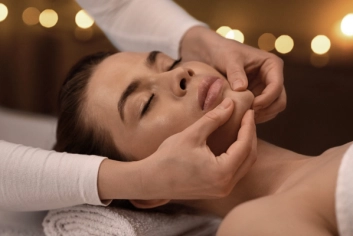





KOBIDO - JAPANESE LIFTING MASSAGE – THE ELIXIR OF YOUTH
Kobido, meaning “the ancient path of beauty” (from the Japanese “ko” – ancient, “bi” – beauty, and “do” – way), is far more than a facial massage. It is a refined Japanese therapeutic system that blends Eastern philosophy, anatomical precision and a holistic understanding of the human body.
Developed centuries ago as a ritual for preserving youth and vitality, Kobido combines fast, precise techniques with deep stimulation of the facial muscles and microcirculation. The result is a natural lifting effect, smoother skin and a visibly refreshed, radiant complexion.
Rather than relying on invasive methods, Kobido works in harmony with the body, activating its natural regenerative processes. This is why it is regarded as one of the most sophisticated and effective natural approaches to facial rejuvenation.
Some say Kobido - Japanese rejuvenating facial massage is beauty’s best-kept secret. But secrets are meant to be shared – and your face deserves this unique encounter with itself. So, are you ready to take the first step toward falling in love again – not just with how you look, but with how you feel?
How does it work?
Here is the process: a skilled therapist with expertly trained hands “reads” your skin as if it’s an ancient scroll full of mysteries. The techniques used in this massage are not mere movements – they’re a dance between precision and care, harmony and purpose. Every touch is designed to awaken the hidden strength of your facial muscles, stimulate lymphatic flow, and give you that radiant glow that makes people ask, “What’s your secret elixir?”
Every press, every motion blends ancient wisdom with modern science. Kobido - Japanese face massage tells a story where youth and beauty meet once again. The deeper techniques mastered by Japanese artisans, this therapy works like a delicate symphony of movements that penetrate beneath the surface. It combines precision, rhythm, and special care for your facial muscles.
And who wouldn’t want a “natural lift” without setting foot in an operating room? Kobido massage proves that nature and science can work together in perfect harmony to create a unique anti-aging facial massage. It smooths wrinkles, lifts facial contours, restores elasticity, reduces puffiness, and refreshes your skin. (No, we won’t use the word “restart,” but let’s just say this facial massage is like pressing the Refresh button for your face.)
Here’s the best part: while your skin rejuvenates, your mind finds peace. Because this massage isn’t just a cosmetic procedure – it’s a journey. A journey back to yourself, where you remember that caring for your face is also caring for your soul.
True beauty is quiet. It appears when everything inside you is in harmony.
What Techniques Does the Japanese Lifting Facial Massage Use to Combat Wrinkles?
Kobido Facial massage isn’t just a procedure – it’s a true art form where every movement is carefully crafted to bring out the best in your skin and musculature. Inspired by Japanese traditions and enriched with modern science in myofascial care, Kobido doesn’t just renew your face; it tells the story of balance between strength and gentleness.
- Deep tissue movements
Imagine every bit of tension from your daily life as a small knot in your facial muscles. Through deep, precise movements, these knots unravel, sculpting your facial contours with elegance and symmetry. - Lymphatic drainage
Think of this technique as a river of beauty – gentle, rhythmic strokes stimulate lymphatic flow, clearing toxins and reducing puffiness. The result is radiant skin with a refined texture, as if you’ve just woken up from the deepest sleep. - Precise pressure on key points
Hidden within your face are energy "channels" – vital points that hold the key to harmony. Through careful pressure, Kobido unlocks them, releasing not only physical tension but emotional stress as well. - Myofascial facial massage
The fascia, an invisible network of connective tissue, often becomes "compressed" by stress and adhesions. Japanese facial massage Kobido works with the fascia, freeing stiffness and restoring movement – because beauty is about flow, not stagnation. - Rhythmic smoothing
With movements as gentle as a morning breeze, Kobido stimulates collagen and elastin production, restoring the firmness and density that time sometimes takes away. - Deep muscle stimulation
The deep muscles are the architects of your face – they maintain its shape and structure. This lifting Japanese massage engages them to bring back the toned, youthful appearance of your skin, without the need for invasive procedures. - Smoothing fine lines and wrinkles
Every line tells a story of your life, but let’s make sure only the most beautiful ones remain visible. Through delicate care and precision, Kobido smooths wrinkles while preventing new ones from forming.
Kobido's techniques form a true ritual where every touch has a purpose. This luxury face-lifting therapy doesn’t just rejuvenate your skin – it reminds you of the magic hidden within your face. A magic that this unique facial massage reveals with precision and care. Inspired by the Japanese Kobido massage, this therapy is a true transformation that awakens youth, strengthens muscles, and restores harmony to your face.
The Unique Benefits of the Japanese Rejuvenating Facial Massage
Kobido - The Japanese rejuvenating massage is an experience that transforms your skin, muscles, and emotions. Here’s what you can expect:
- Natural lifting – beauty in its purest form
This technique lifts the skin and sculpts facial contours without needles or surgical interventions. It’s not just tightening – it’s a return to your face’s natural structure, leaving you refreshed and youthful without artificial alterations. - Radiance that starts from within
Kobido massage stimulates blood circulation, infusing your skin with oxygen and nutrients. The result? A complexion that glows with health. - Smooth skin, effortlessly
Say goodbye to fine lines and wrinkles – Kobido face massage smooths skin texture, boosts collagen and elastin production, and transforms your face into a canvas of youth. - Farewell to puffiness
Gentle lymphatic movements help reduce puffiness and flush out toxins. Your face appears fresher, contours become more defined, and your reflection greets you with renewed energy. - Emotional recovery reflected on your face
Beauty isn’t just physical – stress often “weighs” on the face. Kobido relaxes the face muscles and also releases built-up tension, leaving your face calm and harmonious. - Cellular detoxification
By stimulating lymphatic flow, Kobido helps rid the skin of toxins that cause dullness and fatigue. The result is renewed, clear skin that feels light and fresh. - Fascia restoration – the foundation of youthful skin
The myofascial component of the lifting massage works deeply, releasing tension in the tissues and restoring flexibility and strength to the skin. This is more than facial care – it’s strengthening the very foundation of your beauty. - Effortlessly defined contours
The rejuvenating Japanese Kobido massage sculpts your face by naturally enhancing the jawline and cheekbones. The effect? A more defined, yet natural look that radiates energy and confidence.
What to Expect During Your Kobido Session
The session begins in a calm environment, allowing the body to gradually shift into a slower, more relaxed state.
The skin is carefully prepared, after which the main work begins. Precise, rhythmic techniques are combined with deeper movements that stimulate the muscles, circulation, and lymphatic flow. Kobido is performed in a structured and sequential way, with a clear approach and attention to every area.
As the session progresses, tension gradually decreases and the sensation becomes lighter and more balanced. Many people describe the experience as a deep state of relaxation, close to a meditative calm.
After the Kobido facial massage, the face appears fresher and more rested, the contours are more defined, and the expression looks calmer. The feeling of lightness and balance remains even after the session.
Treatment duration:
60 minutes – a complete session focused on the core Kobido techniques, working on facial muscles and contours, improving tone and refreshing the skin.
90 minutes – an extended session with more time for in-depth work on muscles, contours, lymphatic flow, and the nervous system, offering deeper relaxation and a more pronounced effect.
The History of Kobido – From the Imperial Court to Modern Practice
Kobido is a system developed and refined over centuries, where therapeutic practice, culture, and a deep understanding of the human body come together in a way that is rarely seen today.
The roots of Kobido can be traced back to the ancient Japanese technique Anma – one of the oldest forms of manual therapy in Japan. Influenced by traditional Chinese medicine, Anma was practiced as early as the early medieval period. It was not simply massage, but a method of working with the body through pressure, rhythm, and energy pathways to restore internal balance.
In the 15th century, these techniques reached a new level. According to historical accounts, two of the most skilled Anma masters were invited to the imperial court to demonstrate their art before the Empress of Japan. This was not just a presentation, but a competition – a test of precision, sensitivity, and depth of understanding of the human body.
What followed was unexpected. Instead of declaring a winner, the two masters chose to combine their knowledge. This marked the creation of a school that later became known as Kobido – “the ancient path of beauty.” It was not simply a name, but a philosophy: beauty is not created from the outside, but supported through internal balance and proper care of the body.
For centuries, Kobido remained reserved for a very limited circle. It was practiced within the imperial court, among noblewomen and geishas – women for whom appearance was not just aesthetics, but part of presence, culture, and the way they influenced others. For them, the face was not just visual – it was expression, communication, and control over every movement. They influenced people not through effort, but through a presence that is felt immediately.
This is why facial care was never superficial. Kobido techniques were used not only to maintain the skin, but to stimulate muscles, circulation, and internal energy. In traditional Japanese understanding, the face reflects the condition of the entire body, and specific areas are connected to internal organs and systems.
Over time, the techniques evolved and became more refined. Kobido includes dozens of movements – from fast, rhythmic and almost vibrational techniques to deep myofascial work and precise lifting motions. This dynamic nature is what makes it unique. The change in rhythm creates a response in the tissues, activating circulation and stimulating the muscles in a way that cannot be achieved through superficial techniques.
Interestingly, this system was never fully open. The knowledge has been passed from master to student within specific lineages, and the original Kobido tradition still exists today, preserved by a small number of practitioners. Each generation does not simply repeat the techniques, but refines them while preserving their core.
In the modern world, Kobido is experiencing a strong revival. The interest in natural methods for maintaining the skin and slowing down aging is growing, and more people are seeking alternatives to invasive procedures. This places Kobido in a new context – not as an exotic technique, but as a conscious choice.
Today, it is often described as a “natural facelift,” but its essence goes beyond that. Kobido does not work only on the surface of the skin. It affects the muscles, connective tissue, and circulation, creating conditions for the face to look more alive, more relaxed, and more balanced.
And perhaps most importantly – the result does not come from a single technique or movement. It comes from the way everything is connected – rhythm, sequence, and understanding of the body. That is what makes Kobido so distinct and so difficult to replicate.
The Secrets of Japanese Women: The Legend of Eternal Youth
It is said that in an ancient Japanese village, hidden among the misty mountains, there lived a woman with skin as smooth as porcelain and radiant as moonlight. She was known as Mizuki – the Guardian of Youth. The legend tells that even as she passed her nineties, her face remained flawless, and her eyes – lively and sparkling. The locals claimed her secret was the art of touch – a ritual she perfected over the years.
Mizuki believed that youth wasn’t just a matter of age but the energy we carry within. She developed a technique inspired by the movements of nature – the gentle waves of rivers, the rhythmic sway of trees in the wind, and the steady strength of rocks. Through these movements, she nurtured not only the skin but the soul. “Touch,” she would say, “is like a whisper to the face – if it’s sincere and caring, the face will respond.”
Centuries later, Mizuki’s techniques became the foundation of Japanese rejuvenation traditions. Her legend continues to inspire women in Japan, who today practice skincare rituals with precision and dedication. From intricate massage techniques to the use of natural ingredients like rice water and chrysanthemum tea, Japanese women don’t just care for their faces – they create a ritual of harmony and respect for their inner and outer beauty.
The secret? It’s simple: consistency, self-respect, and a touch of magic passed down through generations. Because, as the Japanese love to say, “Beauty comes from within, but the art of preserving it is in your hands.”
Legend of Beauty: Princess Kaguya
In Japan, one of the most cherished and ancient legends is that of Kaguya-hime – the princess from the bamboo stalk. The story tells of an elderly bamboo cutter who discovers a small, radiant figure inside a bamboo stalk. It was Kaguya, a princess from the Moon, sent to Earth to escape the wars and conflicts of her celestial realm.
Princess Kaguya grew up with extraordinary beauty, so dazzling that anyone who saw her was left breathless. But the secret to her eternal youth was not in earthly care but in divine rituals she carried from her homeland on the Moon. It is said that Kaguya used morning dew collected from bamboo leaves to refresh her face. “This dew,” she would say, “is not just water – it is the magic of the Earth combined with the heavens.” With gentle movements, she massaged her skin, allowing each drop to absorb as if nature itself was touching her face. This ritual was believed to not only keep her skin youthful and glowing but also to dissolve any tension or worry.
The legend tells that when the princess returned to her celestial kingdom, she left the knowledge of these rituals with the people of Japan. Since then, bamboo dew, green tea, and gentle touch have become part of Japan’s skin care traditions. Even today, Japanese women preserve this philosophy – beauty is not just external but a harmony of caring for the soul and connecting with nature.
Today, the Japanese believe that rituals inspired by Kaguya carry within them care not just for the skin but also for the soul. Morning dew, the touch of the skin, and self-care are a gentle reminder that beauty lies within us, and the magic is in how we nurture it.
So, the next time you touch your face, remember Princess Kaguya – and let nature tell you its own version of youth.
Japanese Facial Massage – A Ritual of Beauty and Harmony
Immerse yourself in the elegance of Japanese traditions for rejuvenation and relaxation. This special facial massage combines ancient techniques with modern care practices to restore your skin’s natural radiance and balance the energy within your body.
With refined movements that stimulate circulation and lymphatic flow, the Japanese facial massage enhances skin texture, reduces signs of fatigue, and promotes cellular regeneration. It’s a ritual that not only highlights your beauty but also creates a sense of tranquility and inner harmony.
Visit Padmalaya Massage Center, where the art of touch creates unique moments of care and beauty.
Address: 9 Sveti Sedmochislenitsi St., Lozenets, Sofia
At Padmalaya, the ancient art of beauty comes alive – feel the difference with every touch.
Kobido and Shiatsu – a holistic path to restoration
Kobido can be combined with Shiatsu as a holistic approach, where the body and the face are viewed as one system. Shiatsu works on the nervous system, energy pathways and deep tension in the body, supporting the body’s natural regulation and creating a sense of balance and stability.
Kobido works on the facial muscles and structure – it stimulates microcirculation, helps define the contours and restores the skin’s freshness.
When combined, the two therapies address both the internal state and the external appearance. Tension gradually gives way to harmony, the expression changes, and the feeling of lightness and natural rhythm returns.
Shiatsu and Kobido – when the body remembers what it feels like to be in balance.
Contraindications for Japanese Facial Massage
While this type of massage is highly effective and suitable for most people, there are specific conditions where the therapy is not recommended:
- Cardiovascular conditions
For severe conditions like unstable hypertension or thrombosis, prior consultation with a doctor is necessary. - Rosacea or susceptibility to broken capillaries
The massage may be too intense for sensitive skin prone to capillary damage. - Recent surgical procedures
If there has been surgery in the facial, neck, or décolletage area, the massage should be postponed until full recovery. - Severe allergic reactions
In cases of strong allergies, particularly to oils or products used during the massage, the therapy should be adapted or avoided. - Neurological disorders
For conditions like facial nerve paralysis or other neurological issues, the massage must be performed with caution and only after consulting a specialist. - Pregnancy (first trimester)
While the massage can be adapted for pregnant women, the first trimester is a delicate period during which intensive therapies should be avoided. - Severely inflamed or irritated skin
Active skin issues like acne, eczema, or other inflammations may worsen with massage. - Removed lymph nodes
Lymphatic drainage may not be appropriate in areas lacking lymph nodes. - Recently administered Botox or fillers
Massage should be avoided for at least 2–3 weeks after aesthetic procedures to prevent unwanted displacement of the products. - Recent medical-aesthetic treatments
If treatments such as laser therapy or peels were recently performed, the massage should be postponed for at least 20 days. - Plastic surgery
Massage is not suitable immediately after facial surgeries. Full recovery and approval from the treating physician are required. - Fever and acute infections
Massage should be postponed in cases of elevated temperature, colds, or viral illnesses. - Wounds, abrasions, or hematomas
The therapy should not be performed on skin that has not fully healed.
Kobido - Japanese Lifting Massage | The Japanese rejuvenating facial massage Kobido is a unique therapy inspired by ancient techniques, designed to restore the natural beauty and elasticity of the skin. Through precise movements and myofascial facial massage, this therapy enhances facial contours, smooths wrinkles, stimulates lymphatic flow, and restores the skin's healthy glow. A natural facelift without invasive procedures. |
|
Holistic Rejuvenation and Balance Ritual – Shiatsu & Kobido | Shiatsu & Kobido combines body and facial work in one connected and carefully structured process. Shiatsu releases accumulated tension, calms the nervous system, and creates space for emotions to gradually settle. As the body relaxes, the sense of discomfort and inner tension begins to fade. On this foundation, Kobido facial massage works in depth – smoothing lines, refining the contours, and restoring the skin’s natural freshness. The face begins to reflect what is happening within – a calmer expression, softer features, and more vibrant skin. This is a therapy where change is not limited to appearance. It begins in the body, moves through the inner experience, and remains as a sense of balance that can be both seen and felt. |
|
Преживяването беше много приятно и интересно. На моменти енергично, на моменти отпускащо. Със сигурност много различно от всичко, което лицето ми е изпитвало досега.
С удоволствие ще си подаря отново тази наслада.
След Кобидо лицето ми изглежда по-свежо и по-отпочинало, а кожата – по-жива.