




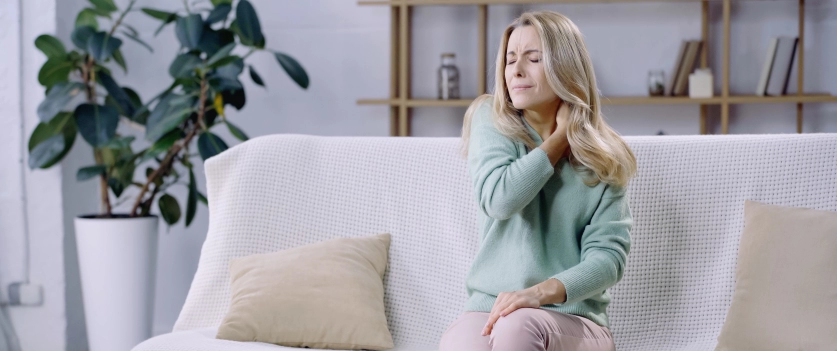



You know that feeling – you sit down to rest, but your mind keeps spinning tasks, plans, problems. As if even when your body is still, there’s a motor inside you that won’t stop. The more you try to relax, the more exhausted you feel.
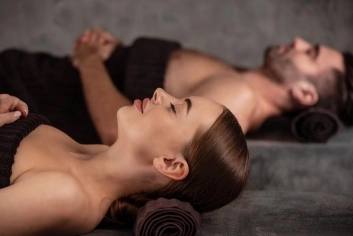
Reiki begins exactly there – in the silence after the noise. In that moment when your breath slows down and you sense that something within finally lets go. It’s not a “massage,” not a technique that’s simply applied. It’s a meeting – between you and your own energy. Between the tension you’ve carried for years and the flow that’s been waiting to be released.
Reiki doesn’t chase symptoms. It touches the causes behind them. And that’s where true transformation begins – from the inside out.
What is Reiki?
Reiki comes from two Japanese words: rei – universal wisdom, and ki – vital energy, also called spiritual energy or life force, which exists both around us and within us. When these two meanings come together, the essence is revealed – to reconnect with the power that has always been within you.
In the early 20th century, the Japanese Buddhist Mikao Usui developed Reiki as a system that channels energy to restore harmony in both body and mind. There are no dogmas, no rituals, no religious frames here. Reiki is not a belief, not suggestion – it is a practice. A touch without effort, one that doesn’t simply treat the surface symptoms but reaches the very causes behind them.
What makes Reiki fascinating is that it works on all levels – physical, emotional, mental, and spiritual. And in some cases, it has even been shown to work at a distance.
It is a bridge between silence and movement. Between the weight you carry and the lightness waiting to be released.
You don’t need to believe in it to feel the effect. In Reiki, through gentle touch, the practitioner helps to release energy blockages. The result? Less stress, deeper rest, greater clarity, and balance returning to where it was lost.
Reiki is a holistic method – it doesn’t chase the symptoms, it reaches the root. And that’s what makes it so valuable: instead of plugging a leaking faucet, you discover why the pipe was cracked in the first place.
Who Is Reiki For?
Reiki is for anyone who wants to feel more ease and harmony in life.
- For tired and overworked people seeking a breath of relief from daily stress.
- For those living with anxiety or inner imbalance who long to regain their calm.
- For active and athletic individuals who need to restore their strength and energy.
- Suitable for all ages – children, adults, women, and men.
Reiki works with your whole being – body, mind, and emotions. The universal life energy supports restoration on physical, emotional, mental, and spiritual levels. But the beauty of Reiki is that you don’t need to have symptoms or problems to benefit. Even in perfect health, you can experience deep relaxation, renewed energy, and inner balance that make life lighter and more fulfilling.
Reiki in Action: How Energy Healing Restores Flow
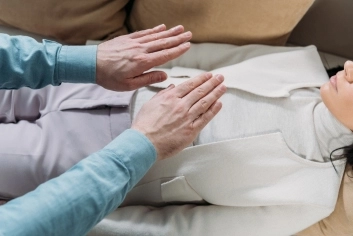
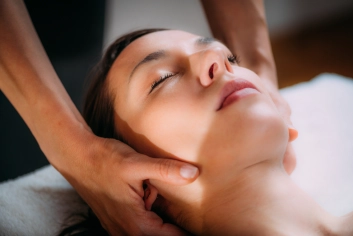
Reiki works through effortless touch – gentle, yet profoundly deep. The therapist does not “press” or “manipulate” the body but allows the energy to flow where it has been blocked. It is a meeting between your inner strength and the space that opens once tension begins to dissolve.
Energy blockages are like knots – sometimes they show up as heaviness, fatigue, or pain, and other times as a lack of motivation and clarity. Reiki does not fight symptoms on the surface; it reaches the root hidden behind them.
That is why the effect is not only physical. A session brings lightness to the body, calmness to the mind, and the quiet feeling that balance is returning – naturally, effortlessly, in its own rhythm.
During a Reiki session, something happens that words can barely capture – the body’s energy centers, known as chakras, begin to open. This is not a “trick” or a mystery but a natural process: once the blockages are released, life energy finds its path and starts flowing freely. In that flow come ease, serenity, and the sense of inner harmony.
The Reiki therapist acts as a bridge – focusing their attention to support the clearing of disturbances and the purification of the energy pathways (meridians). This cleansing affects not only the body but also the aura – the luminous field of energy surrounding each person. When it clears, the feeling is like dropping a heavy cloak and taking your first easy breath after long suffocation.
Reiki works with all seven main chakras as well as the additional ones, because true balance is never partial – it is whole. And what makes Reiki unique is that this energy is intelligent: it flows exactly where it is most needed. The therapist does not impose solutions or alter your body; they are simply a mediator between you and the universal life energy.
And here lies the beauty of Reiki – you receive exactly what you need. Not more, not less. Not according to the therapist’s will, nor any preset plan. Only your body and your energy know what the perfect balance is for you – and that is the gift of Reiki.
What are benefits of Reiki therapy?
After a Reiki session, it feels as if someone has pressed a hidden reset button – the tension fades, the mind quiets, and the body finds new lightness. And this is not just a feeling. Here’s what research shows about the benefits of Reiki:
- Physical: relaxation, energy, better sleep.
A study in the Journal of Evidence-Based Complementary & Alternative Medicine shows that Reiki activates the parasympathetic nervous system, lowering blood pressure and slightly slowing the heart rate. Participants also reported deeper and better-quality sleep after several sessions. - Emotional: reduced stress, more ease.
A systematic review of randomized controlled trials, published in Global Advances in Health and Medicine, found that Reiki has a stronger effect than placebo on stress and anxiety symptoms. - Mental: concentration, clarity of mind.
A randomized study with patients experiencing high anxiety levels shows that Reiki reduces feelings of tension and improves mood. And when anxiety subsides, clarity and focus follow. - Spiritual: connection with yourself, inner peace.
A meta-analysis published in BMC Complementary Medicine and Therapies highlights significant improvement in quality of life among people who received Reiki sessions – not only physically, but also emotionally and spiritually.
Reiki can:
• Accelerate the healing of tissues and bones after injury or surgery.
• Strengthen the immune system and activate natural self-healing mechanisms.
• Relieve pain and muscle tension often carried as armor from stress.
• Support the body during medical treatments by bringing calm and inner stability.
• Help with conditions such as panic attacks, fears, depression, anxiety, and emotional exhaustion.
• Clear energy blockages, harmonize the chakras, and raise the vital vibration.
• Restore balance and the feeling of being “at home” in your own body again.
Reiki cannot:
• replace traditional medicine – and does not claim to. But it can complement it, ease pain, accelerate recovery, and provide inner strength when the body and mind need support.
The most important thing? Reiki energy can never harm you. It simply creates space for balance. And when balance returns, life begins to feel lighter, clearer, and more fulfilling.
When to Have Reiki Sessions
Reiki is suitable whenever you feel that your body and mind are sending signals of stagnation. This can show up as fatigue, lack of motivation, tension, or simply the sense that something inside you is out of balance.
Many people turn to Reiki during times of change, stressful situations, or personal crises – when the inner compass feels lost and support is needed.
Sessions can also be part of prevention – a way to maintain inner harmony and keep your energy flowing freely, even when everything seems fine on the surface.
Reiki can be combined with other therapies or massages, enhancing their effect and adding a new layer of recovery – not just for the body, but also for the mind and emotions.
To activate the long-term effects of Reiki, it is recommended to start with four consecutive basic sessions. Specialists suggest continuing with one full session every two weeks to maintain and strengthen the results. In practice, the more regularly you engage in Reiki sessions, the more the power of life energy increases.
After each massage or energy therapy, it is advisable to drink more water to support the elimination of toxins from the body.
And to maximize the benefits of Reiki, we recommend following the Five Reiki Principles daily:
Just for today, do not be angry
Just for today, do not worry
Just for today, be grateful
Just for today, work diligently
Just for today, be kind to others
Reiki – an invitation to the peace and strength within you
Reiki is a return to yourself. To the calm, the balance, and the inner strength that have always been there. The miracle you’re looking for is not outside – it’s within you.
All it takes is one step: to allow yourself to pause, to receive, and to feel. At Padmalaya, you’ll find the space where this step unfolds naturally.
Chakras and Reiki – how are they connected?
What are chakras – energy centers?
Chakras (from Sanskrit cakra — “wheel”) are an ancient concept in Eastern traditions (yoga, tantra), describing energy centers – gateways through which life energy (prana, ki) flows. Traditionally, seven main chakras are described, located along the spine – from its base to the crown of the head.
In modern theories, they are often associated with nerve centers and glands of the endocrine system. It is believed that when chakras are open and harmonious, energy flows freely, positively influencing physical and emotional well-being. When blocked – fatigue, tension, and stress appear.
| Chakra | Location | Governs | When blocked | When balanced |
|---|---|---|---|---|
| Root (Muladhara) | base of the spine | security, stability | fear, anxiety, weakness | grounding, stability |
| Sacral (Svadhisthana) | pelvic area | emotions, creativity, sexuality | lack of joy, coldness | creativity, joy |
| Solar Plexus (Manipura) | stomach area | willpower, confidence | low self-esteem, fears | strength, determination |
| Heart (Anahata) | chest area | love, compassion | emotional closure | harmony, empathy |
| Throat (Vishuddha) | throat | expression, communication | fear of speaking | clarity, honesty |
| Third Eye (Ajna) | forehead | intuition, vision | confusion, lack of vision | insight, clarity |
| Crown (Sahasrara) | top of the head | spiritual connection, consciousness | alienation, emptiness | enlightenment, connection |
How the Chakras Feel – Blockage and Harmony
When the energy in a chakra doesn’t flow freely — it feels like heaviness, stagnation, a silence that screams. When it is in harmony — you feel flow, lightness, and inner freedom. Let’s look at each chakra individually — with depth and clarity:
Root Chakra (Muladhara)
Blockage: Fear, anxiety, and deep insecurity. Physically it may manifest as issues in the lower back, legs, muscle weakness, digestive problems, or urinary dysfunctions.
Emotional: Feeling like you lack solid ground, worries about safety and stability.
Harmony: Stability, grounding, confidence, and inner strength to handle life.
Sacral Chakra (Svadhisthana)
Blockage: Creativity suppressed, emotional impulses muted. Difficulty expressing desires or enjoying intimacy. Sometimes linked to reproductive or urinary issues.
Emotional: Repressed feelings and stored trauma, often held in the body.
Harmony: Flow of passion, creativity, and joy. Emotional freedom and balanced intimacy.
Solar Plexus (Manipura)
Blockage: Insecurity, low self-esteem, fear of making decisions, often accompanied by digestive issues or stomach tension.
Harmony: Calm confidence, clarity, willpower, decisiveness, and strong self-worth.
Heart Chakra (Anahata)
Blockage: Tightness in the chest, emotional isolation, difficulty loving or forgiving.
Harmony: Free breathing, compassion, empathy, love without fear.
Throat Chakra (Vishuddha)
Blockage: Difficulty expressing yourself, fear of criticism, suppressed voice. May show up as throat or neck issues.
Harmony: Authentic voice, clear expression, communication with honesty and confidence.
Third Eye (Ajna)
Blockage: Headaches, confusion, lack of vision, difficulty trusting intuition.
Harmony: Insight, clear intuition, inner vision, stronger sense of direction.
Crown Chakra (Sahasrara)
Blockage: Emptiness, detachment, lack of meaning, spiritual disconnection.
Harmony: Spiritual awakening, unity, connection with something greater, deep peace and enlightenment.
When the chakras are harmonized, it feels like all the strings of an instrument being tuned at once — body and mind begin to resonate in a shared melody.
Chart of the 7 chakras

Reiki - Energy healing | Reiki is an encounter with pure universal energy – an unseen force that awakens the inner light and restores harmony where it was lost. It opens a space for deep rest and renewal – a moment when tension dissolves, and both body and mind remember what it means to be in unity. |
|
Препоръчвам Рейки терапията при Петър на всеки, който търси вътрешна хармония, спокойствие и време за себе си. За мен това беше много приятно и много зареждащо преживяване.